Cannabis, ADHD, and Your Brain's Built-In Cannabinoid System
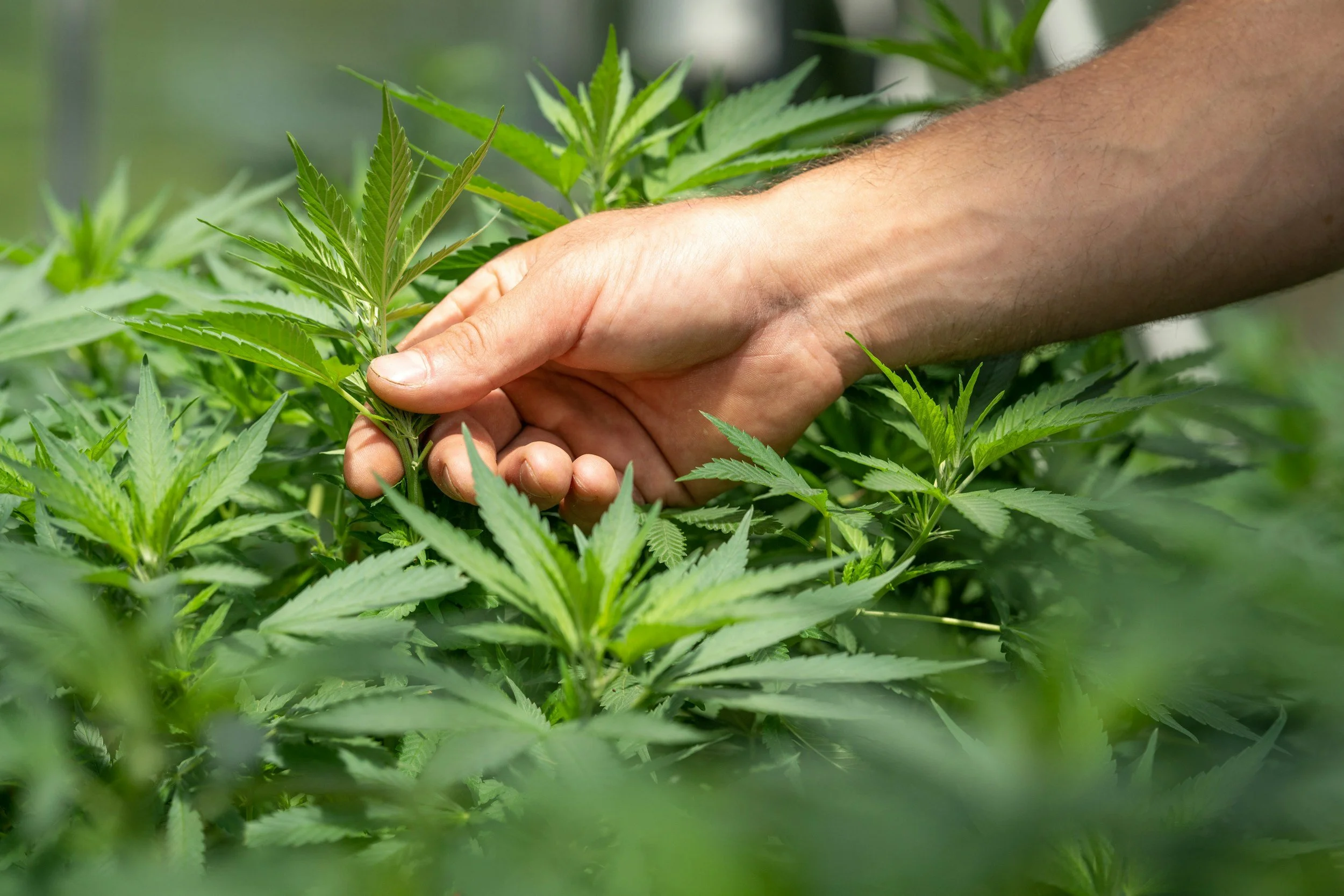
A 2024 scoping review from Thomas Jefferson University maps what we know — and what we urgently still need to learn.
If you have ADHD, there's a good chance you've heard someone say cannabis helps them focus. Or you've tried it yourself. Or you've seen the online forums where thousands of people describe using cannabis to self-medicate their symptoms. It's one of the most talked-about unofficial treatments for ADHD, and the conversation is only getting louder as cannabis becomes more widely legal and accessible.
But what does the science actually say?
A 2024 scoping review published in Developmental Psychobiology by researchers at Thomas Jefferson University took a rigorous look at the existing research — preclinical animal studies and clinical human studies — on the relationship between ADHD and the endocannabinoid system (ECS). What they found is exactly what the most honest version of science tends to look like: genuinely interesting biological connections, a compelling theoretical framework, and clinical evidence that's still far too sparse to draw firm conclusions from.
Let's walk through it carefully, because this is a topic where the nuance really matters.
---
YOUR BRAIN ALREADY HAS A CANNABINOID SYSTEM
Before we talk about cannabis, it's worth understanding that your brain has its own built-in cannabinoid system — one that's been there since long before the cannabis plant entered the picture.
The endocannabinoid system (ECS) is a complex biological network distributed throughout virtually every tissue in the mammalian body. Its primary receptors in the brain are two G-protein coupled receptors: CB1R and CB2R. CB1R is the one that matters most for ADHD, because it's located throughout the central nervous system and plays significant roles in cognition, memory, learning, emotion, mood, motor activity, and motivation.
Think of CB1R as a master volume knob for neural signaling. When activated, it dampens or amplifies communication between neurons — particularly for dopamine and serotonin, the neurotransmitters most directly implicated in ADHD. The ECS doesn't work in isolation; it's in constant conversation with the dopaminergic and serotonergic systems that ADHD medications target.
The brain also makes its own cannabinoids — called endocannabinoids — the most studied of which are anandamide and 2-arachidonoylglycerol (2-AG). These aren't stored and released like traditional neurotransmitters; instead, they're made on demand and travel backward across synapses to fine-tune neural communication in real time. The ECS is essentially a feedback and regulation system for the brain.
Cannabis works by introducing external cannabinoids — primarily THC and CBD — that interact with this system. THC activates CB1R directly. CBD works through multiple, more complex mechanisms and does not produce the psychoactive "high" associated with THC.
---
WHY ADHD AND CANNABIS ARE SO INTERTWINED
People with ADHD use cannabis at rates significantly higher than the general population. They also develop cannabis use disorder more frequently. This isn't random — and it's not simply about people with ADHD making poor decisions. The leading hypothesis is called the self-medication theory: that people with ADHD turn to cannabis because it provides relief from symptoms that aren't being adequately managed.
There's a self-report survey included in this review that makes this concrete. Stueber and Cuttler (2022) surveyed 1,738 people and found that among ADHD individuals who used cannabis specifically to manage their symptoms, an overwhelming 91.93% reported that it improved their symptoms. They reported improvements in hyperactivity, impulsivity, restlessness, and mental frustration. They also noted relief from medication side effects like irritability and anxiety.
That's a striking number. And it's exactly the kind of data that generates headlines like "cannabis helps ADHD."
But here's where the responsible scientific thinking has to kick in: self-report surveys are not clinical trials. They can't control for placebo effect, confirmation bias, or the fact that people who found cannabis helpful are far more likely to report using it for symptoms than people who didn't. The survey tells us that a lot of people with ADHD believe cannabis helps them — which is genuinely valuable information — but it doesn't tell us whether cannabis actually is doing what they think it's doing, or whether it might be causing harms they're not noticing.
This is the gap the science needs to close.
---
WHAT THE LAB STUDIES TELL US
The most compelling evidence for an ECS-ADHD connection comes from preclinical animal research — four studies using rat and mouse models of ADHD that reveal some genuinely interesting patterns.
One study (Schneider et al., 2015) created rats with enhanced CB1R signaling and found they exhibited a striking behavioral phenotype: greater risk-taking, impulsive decision-making, heightened sensitivity to food and drug rewards, and increased social play — essentially an exaggerated version of adolescent behavior that persisted into adulthood. These behaviors were indistinguishable from those of normal adolescent rats, and they were reversed when a CB1R antagonist (a blocking drug) was administered. The implication: an overactive endocannabinoid system may be involved in the persistence of adolescent behavioral traits — impulsivity, reward hypersensitivity — that characterize ADHD.
A second study (Pattij et al., 2007) tested a CB1R antagonist directly on impulsivity and attention in rats. The antagonist (a drug that blocks CB1R) reduced impulsive responding and improved visuospatial attention. The CB1R agonist (a drug that activates CB1R) did the opposite — it slowed reaction times and increased errors. This creates a framework where blocking CB1R might improve ADHD-like symptoms, while activating it might worsen them.
A third study (Castelli et al., 2011) used a mouse model specifically designed to replicate the dopamine transporter dysfunction seen in ADHD. These mice showed hyperactivity that could be reversed by stimulants — just like human ADHD. In these mice, CB1R receptors in the striatum had lost their normal sensitivity. Essentially, the GABA-regulating function of CB1R was broken in the ADHD mouse model. This suggests that ECS dysfunction in the striatum may be a contributing factor to ADHD neurophysiology — not just a bystander.
A fourth study (Tzavara et al., 2006) revealed an additional pathway. In hyperactive dopamine transporter knockout mice, levels of anandamide (the brain's endogenous cannabinoid) were reduced in the striatum. When researchers restored anandamide signaling, hyperlocomotion was significantly reduced. But here's the twist: this effect was mediated NOT through CB1R, but through a different receptor called TRPV1 — suggesting that the ECS's effect on ADHD symptoms involves multiple pathways, not just the one THC targets.
These preclinical studies collectively suggest that the ECS is genuinely embedded in the neurobiology of ADHD. They point toward CB1R-mediated striatal dysfunction as a potential mechanism, and they suggest that different ways of modulating the ECS could have very different effects on symptoms.
But animal models are not humans. And this is where the evidence gets considerably thinner.
---
WHAT THE CLINICAL STUDIES TELL US (AND DON'T)
The review identified five clinical studies on how cannabis affects cognition, and two specifically examining whether cannabis helps ADHD symptoms.
On the cognition side, the picture is mixed. THC administration clearly impairs executive function — this is consistent across studies, with one particularly telling brain imaging study showing that THC reduced activity in the brain's default mode network (DMN) in ways that produced worse performance on attention tasks. This is directly relevant to ADHD because abnormal DMN activity is a known feature of the disorder.
Three studies used subsamples from the long-running Multimodal Treatment Study of ADHD (MTA) to look at young adults with ADHD who used cannabis versus those who didn't. The results were largely null — cannabis use didn't appear to significantly worsen executive function or brain connectivity in the ADHD sample beyond what ADHD itself was already doing. However, the researchers were careful to note that these studies had significant methodological limitations: self-reported cannabis use, small sample sizes, and statistical issues with the fMRI analyses that may have produced unreliable results.
On the question of whether cannabis actually helps ADHD symptoms, only ONE randomized controlled trial exists to date. That single RCT (Cooper et al., 2017) tested a pharmaceutical cannabis product with a 1:1 ratio of THC to CBD in just 30 people. It found no statistically significant difference between the active and placebo groups, though there were trends toward improvement in hyperactivity, impulsivity, and emotional lability. The study was underpowered — with only 15 people per group, it simply didn't have enough participants to detect effects that might be real.
One RCT. Thirty participants. No significant findings but hints of a signal. That is the entire controlled clinical evidence base for cannabis as an ADHD treatment.
---
THE THC VERSUS CBD DISTINCTION MATTERS ENORMOUSLY
One of the most practically important points this review makes is that cannabis is not one thing.
THC is the primary psychoactive cannabinoid. It directly activates CB1R and has been consistently shown to impair executive function, worsen attention, and increase impulsive responding on specific motor inhibition tasks — effects that are the opposite of what people with ADHD need.
CBD, on the other hand, does not directly activate CB1R and does not produce cognitive impairment in research studies. CBD products do not appear to worsen executive function. Furthermore, CBD has been shown to actually counteract some of the psychoactive and cognitive-impairing effects of THC when taken together. This is why the 1:1 THC:CBD ratio in the only RCT may have produced a different signal than THC alone would.
What this means practically: when someone with ADHD reports that cannabis helps them, the composition of what they're using matters critically. High-THC products may be doing something very different from high-CBD products. The research almost universally fails to make this distinction clearly, which is one reason the data are so hard to interpret.
---
WHAT THIS MEANS FOR PEOPLE WITH ADHD
The review is careful not to demonize cannabis use in people with ADHD, and it's worth being equally careful here. For people whose ADHD is untreated, undertreated, or accompanied by significant anxiety and mood symptoms, the subjective relief from cannabis is real — even if the underlying mechanism and long-term effects aren't fully understood.
But the scientific picture does offer some important guardrails:
The self-medication instinct is understandable. The biology is there. But THC-dominant cannabis products can impair the exact cognitive functions — executive function, attention, response inhibition — that ADHD already compromises. What feels like relief in the short term may be creating or masking deficits that compound over time.
The ECS is a real and relevant biological system for ADHD. Future therapies that target it more precisely — without the broad and sometimes counterproductive effects of whole-plant cannabis — are an active area of research. FAAH inhibitors, MAGL inhibitors, and TRPV1-targeting approaches all showed interesting effects in the preclinical studies reviewed here.
The research base is simply not there yet. There is one RCT. One. For the millions of people with ADHD who are already using cannabis, that's an enormous mismatch between practice and evidence. More and better research is urgently needed.
---
WHAT THIS REVIEW ADDS TO ADHD SCIENCE
This is the first scoping review specifically examining the ECS-ADHD relationship in depth. Its contribution isn't to answer the question of whether cannabis helps or hurts ADHD — the evidence base isn't there for that. Its contribution is to map the terrain: to show that the ECS is biologically relevant to ADHD, to identify the specific pathways (CB1R, TRPV1, GABA signaling, dopamine regulation) that matter, and to make the case for targeted research in this area.
It also honestly confronts the limits of what we know. The gap between the popular perception (cannabis helps ADHD) and the clinical evidence (one small underpowered trial) is significant. Closing that gap requires rigorous trials, careful distinction between cannabinoids, and attention to the complex neurobiological picture that the preclinical work is starting to reveal.
That kind of intellectual honesty — acknowledging what we don't know as much as what we do — is what good science looks like.
---
A NOTE ON THE STUDY
"Attention Deficit Hyperactivity Disorder, Cannabis Use, and the Endocannabinoid System: A Scoping Review" was published in 2024 in Developmental Psychobiology (Vol. 66, e22540) by Jennie E. Ryan, Mitchell Fruchtman, Andrea Sparr-Jaswa, Amy Knehans, and Brooke Worster from Thomas Jefferson University and Penn State University. The study was conducted following PRISMA scoping review guidelines. Funding was provided by the National Institutes of Health (Grant L40DA056968) and Thomas Jefferson University. No conflicts of interest were declared.
---
At ADHD Awearness, we believe in giving you the full picture — even when that picture is complicated. If this post raised questions for you, share it with someone who's navigating these same conversations.